
Items
Tag
Biology
-
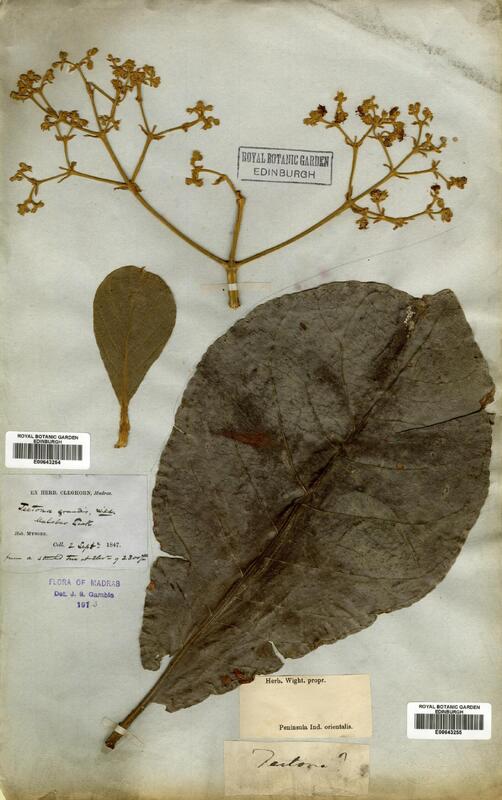 Sample of TeakThis carefully mounted and framed teak specimen from Karnataka (Mysore), collected on 2 September 1847, reveals how the material practices of museum curation can obscure the true circulation of knowledge. These institutional stamps and codes layer bureaucratic authority onto the object. Two stamps from two herbarium collections – that of Cleghorn and Wight – on the same herbarium sheet reveal something unusual. That is, this sample is actually not one sample but two, divided by the faint pencil line that goes around the shape of the mature teak leaf. The sample of the flower and young leaf originally belonged to the Cleghorn collection, while the rest belonged to the Wight collection. It may be the case that the Royal Botanic Garden of Edinburgh reorganised and put these two samples together on one sheet. The specimen is identified by its scientific name as Tectona grandis, followed by its common name, Malabar Teak, and the collection date. Below sits the stamp of the Flora of Madras, accompanied by det. J.S. Gamble and dated 1913 – James Sykes Gamble (1847–1925), British botanist and forester, who authored The Flora of the Presidency of Madras, a foundational three-volume botanical work (completed by C.E.C. Fischer) where Tectona grandis appears in volume 1. The specimen reflects British colonial administrators' and scientists' growing interest in teak, a precious hardwood long valued and utilised by communities across South and Southeast Asia, before colonial powers systematically managed and exploited this resource through the emerging knowledge system of tropical forestry. The object's physical presentation—its careful preservation, institutional framing, and coded classification—creates an appearance of purely Western scientific authority while simultaneously concealing the essential contributions of local informants, forestry workers, or indigenous botanical knowledge holders who may have been involved in its collection. This erasure is particularly significant given that the specimen was collected in 1847, prior to the creation of the Indian Forest Service (1864), and its collection would necessarily have depended on local knowledge and labour. The development of tropical forestry challenges assumptions of unidirectional knowledge flow from West to East. Instead, tropical forestry knowledge emerged in British India and subsequently spread to the United Kingdom—a circulation from colony to metropole.
 -
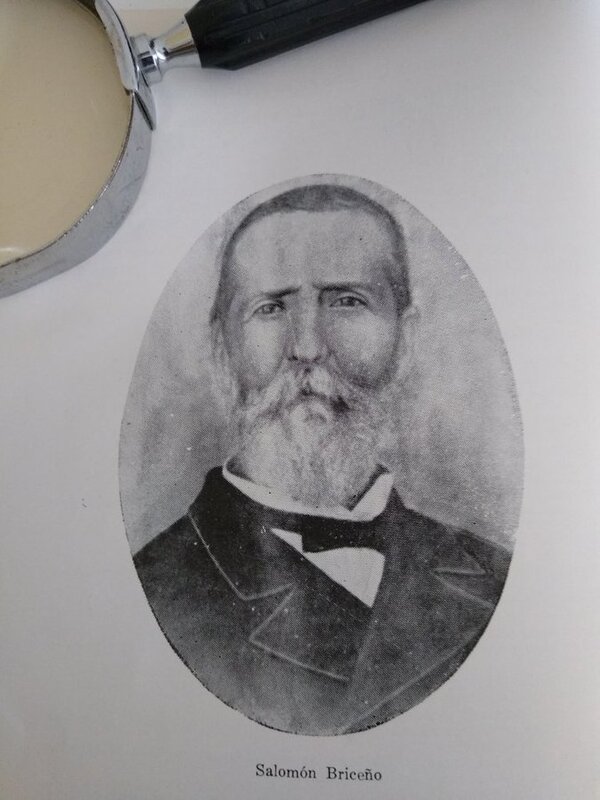 Foto de Salomón Briceño Gabaldón (1829-1912), taxidermist in Mérida, VenezuelaSalomón Briceño Gabaldón (1829-1912) es un excelente ejemplo de una especie de "centro de conexiones científicas". Aprendió taxidermia directamente del propio pintor, naturalista, viajero y taxidermista alemán Christian Anton Göring (1836-1905). A su vez, Göring había aprendido el oficio de su padre, en Alemania. Christian Antón llegó a Venezuela en 1866, y en 1869 llegó a Mérida, donde permaneció un tiempo, y conoció a Briceño Gabaldón. Este último llegó a ser tan competente en la profesión que envió ejemplares durante más de 20 años a museos de Europa y Estados Unidos. Además, Briceño Gabaldón enseñó el oficio a un hijo y una hija, que continuaron su tarea de colecta, taxidermia y envío a colecciones, sobre todo europeas por varias décadas después de su muerte. Un nutrido grupo de sus especímenes fueron conocidos por primera vez para las ciencias gracias a sus envíos a los museos metropolitanos. En total, la familia Gabaldón preparó más de mil ejemplares durante más de 70 años ininterrumpidos, haciendo circular conocimiento sobre vertebrados de los Andes venezolanos entre Sudamérica, Norteamérica y Europa. Consideramos a la figura del personaje tan estimulante, y con una serie de ramificaciones y extensiones de su trabajo e influencia, que juzgamos necesario proponer la difusión de su fotografía, acompañada de esa breve reseña biográfica. Se tendría con él un ejemplo de un naturalista criollo, que sobresale en su arte, y es capaz de imponer nueva información a museos y centros de cálculo europeos y norteamericanos, realizando un labor titánica, en una época donde las condiciones de trabajo y procesamiento de esa muestras no eran precisamente fáciles. Además, formando a una generación de sucesores en el culto de su arte/oficio. Tratándose de solamente una foto de una única persona, se podría llegar a pensar que la información que ésta aporta al observador sea limitada. Por ello, ha hecho falta aportar información adicional, en forma de una breve introducción a su biografía y logros científicos y de trabajo, como la expuesta en la pregunta anterior.
 -
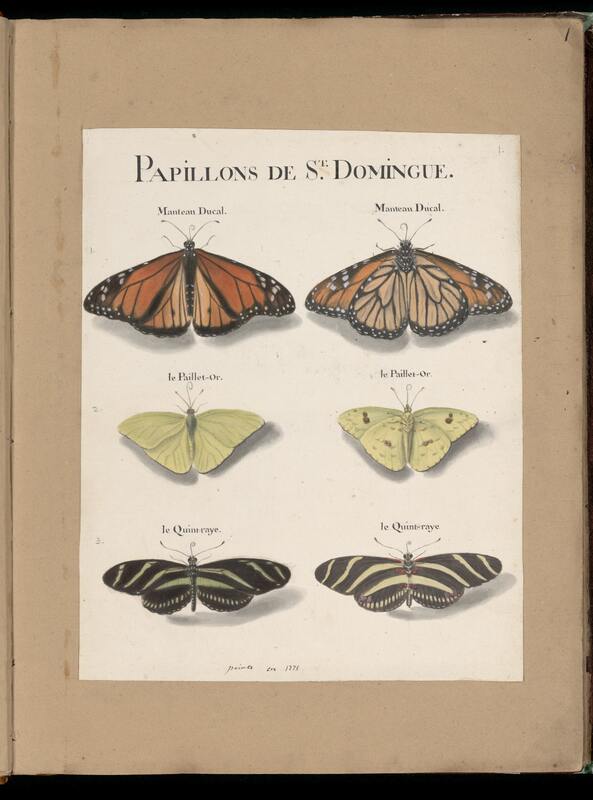 The Saint Domingue AlbumsBetween 1766 and 1784, René Gabriel de Rabié, an engineer who worked in the French colony of Saint Domingue (now Haiti), painted over 320 watercolours of plants and animals. His natural history enterprise was aided by multiple collaborators including his daughter and grandson and numerous unnamed enslaved people who collected and prepared specimens, and assisted in their preservation and depiction. De Rabié identified his specimens using both French and Kréyol names, and provided observations of habitat, distribution and behaviours. His daughter and grandson added glosses to the works, which were bound in Paris in the mid-19th century. De Rabié was one of a number of French naturalists whose work informed the natural histories of Buffon and the scientists of the Jardin des plantes in Paris. The watercolours themselves survived the depredations of insects and the Caribbean climate, revolutions in Haiti and France, transatlantic crossings, and rejection by the Muséum d’histoire naturelle, to be offered for sale by a rare book dealer in England, where they were examined by a curator at the Smithsonian, and acquired in 1930 by Dr Casey Wood, founder of the Blacker Wood Natural History Collection at McGill University Library in Montreal. The Saint Domingue Albums are evidence of the intersection of European, Caribbean, and African ways of understanding the natural world. The survival of the watercolours in the albums speak to the importance accorded to the culture of natural history in the colonial French Caribbean. In collaboration with historians, artists, ornithologists, entomologists, and botanists in Canada, Haiti, the United States, Italy and France, de Rabié’s collection is becoming part of the global history of natural history. Thanks to partnerships with La Sociéte haïtienne d'histoire, de géographie et de géologie and Le Jardin botanique des Cayes (Haiti), it is becoming a resource for the study of Haiti’s history and environment, accessible in English, French and Kreyol.
 -
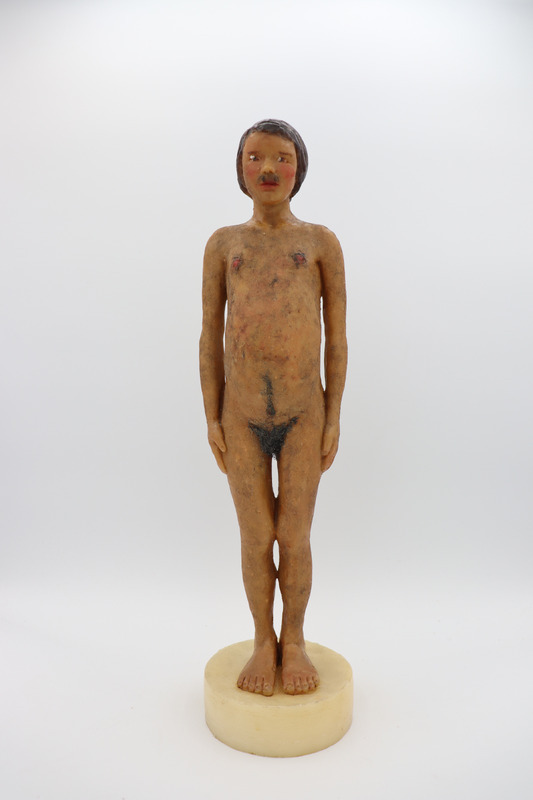 Intersex SomatotypeThis figurine was used during the Second World War to help students without clinical experience ‘recognize’, diagnose, and treat the supposedly pathological traits of intersex peoples’ bodies. As a teaching aid and visual representation, this somatotype demonstrates medical and scientific institutions’ role in solidifying oppressive biases across generations of practitioners. The project that created these somatotypes was inspired by similar models made at Johns Hopkins in the United States, showing how a transnational network of medical expertise interacted with the local practices solidifying the pathologization of intersex people among Canadians. In a 1999 interview, Marjorie Winslow (the artist) recalled that Dr. Robertson encouraged her to exaggerate the 'abnormal' qualities while sculpting the somatotypes. In this case, Winslow used actual human hair to simulate the body hair, pubic hair and moustache that physicians viewed as indicative of the supposed ‘pathology’.
 -
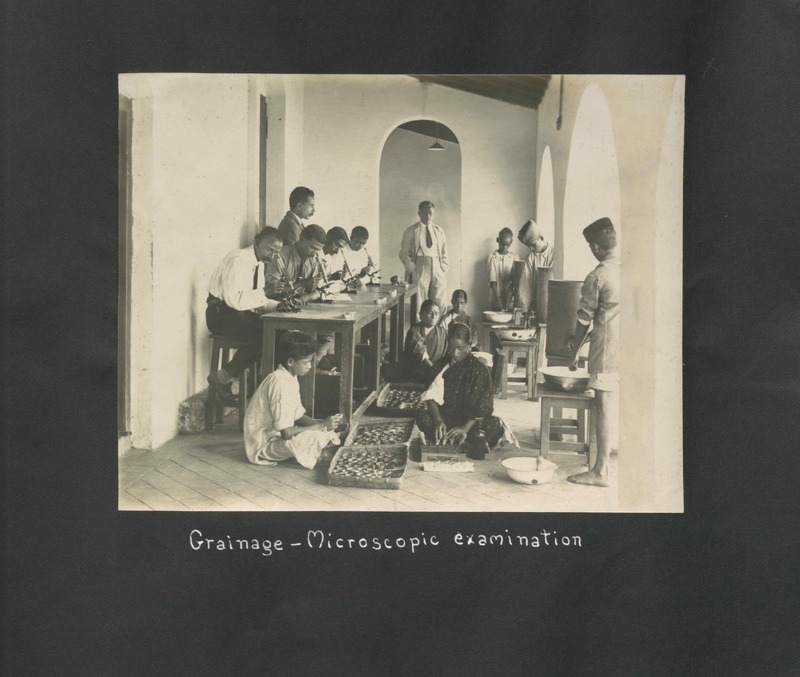 Grainage-Microscopic Examination, Mysore Sericulture DepartmentThis image is from a 1925 photo album (image no. 14 in the listed archival identifier) from the Mysore Sericulture Department in Mysore state, in India. The album showcases a diversity of images from the sericulture process, starting from the cultivation of silkworms, all the way to the production and packing of raw silk. The image is from a collection of material related to Leslie Coleman, a Canadian entomologist, who was initially hired by the Maharaja of Mysore to solve a pest problem in their areca plantations. During his time, he was instrumental in setting up agricultural practices and education, and also extending the sericulture work in the Mysore state. The album’s purpose did seem to be a demonstration of the entire process of running a silk farm. We can’t say for certain who is the photographer, or what prompted Coleman to keep this album (the Archives at NCBS does not have similar albums for other farming processes). But the album and Coleman’s collections are indicative of his cross-cultural moves across colonial empires, from Canada to Germany and eventually to Mysore, India. The object also showcases the technologies that had been established before the arrival of Coleman, in conversation with the Japanese in the late 19th century, including bringing in experts and machinery. This image has an innocuous sounding title, focusing on the 'Grainage-Microscopic Examination' that is integral to sericulture. But we also see the emergence of other societal themes. A group of men sit on chairs and peer at the microscopes; children and women sit on the floor tending to preliminary steps; and a supervisor-like man oversees the examination. This fragment prompts questions around the hierarchy of science, and brings to fore layers of gender, class, caste and labour that anchor sericulture work.
 -
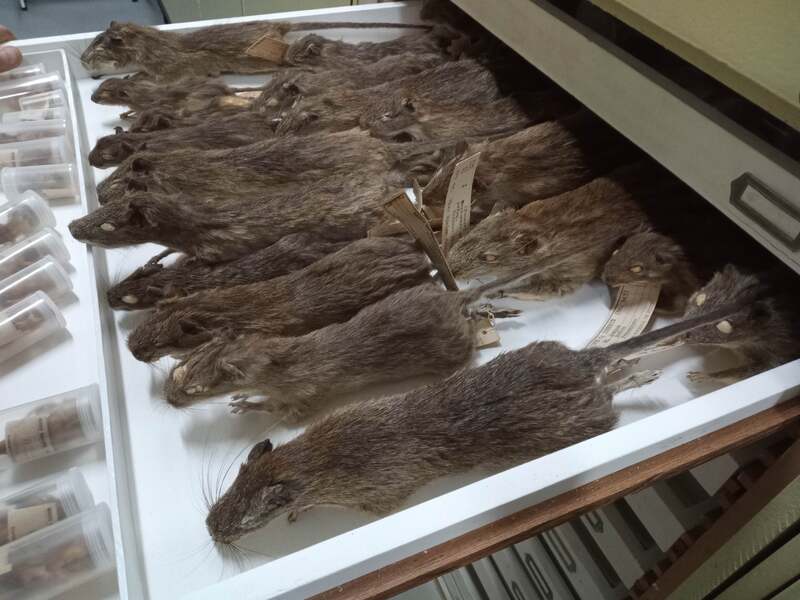 Taxidermized punarés (Thricodomys aperoides)These rodents were collected in the northeast of Brazil and sent to the National Museum, in Rio de Janeiro, where they were studied alongside other animals as part of research into disease ecology. Studying rodents like the punarés was essential for understanding the endemicity of infectious diseases in Brazil and, more broadly, in South America in the 1950s. Capturing and taxidermizing these animals involved many people, spanning from hunters and peasants to doctors and naturalists, each with distinct skills and knowledge. Most of these actors were Brazilians, but South American experts from Chili and Argentina were also involved in some of these activities. As is common in the study of ecology, scholars had to rely on rural communities and their deep knowledge of local fauna.
 -
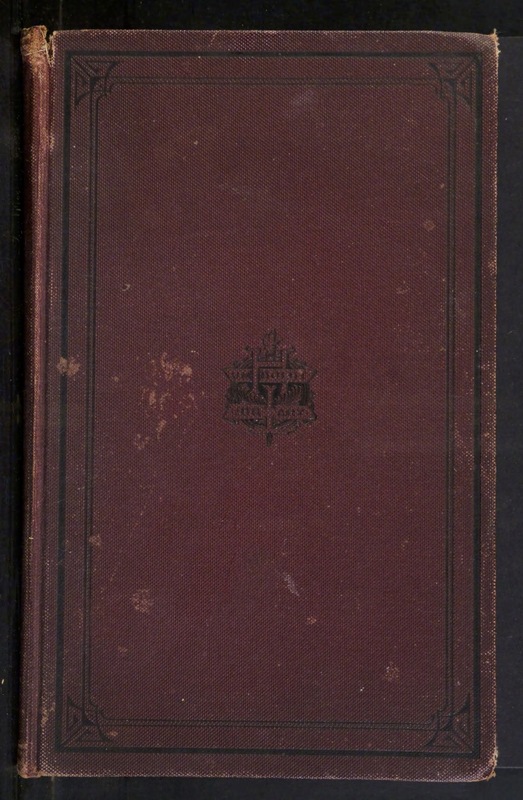 The Descent of Man, and Selection in Relation to SexThis volume is an American pirated edition of The Descent of Man by Charles Darwin, issued in the mid-1880s as part of The Humboldt Library of Science in New York. At the time, the United States did not recognise international copyright, allowing American publishers to reprint British works without paying royalties. Sold for as little as 75 cents (or $1.50 in cloth), this double-columned edition on cheap paper cost a fraction of the authorised John Murray copies imported from Britain, which retailed for $10. Its format reflects a deliberate attempt to make scientific works affordable to a broad readership. Pirated editions were abundant in nineteenth-century America and played a central role in the transatlantic circulation of knowledge. Firms such as the Humboldt Library reprinted popular scientific and literary works quickly and cheaply, often reaching readers far beyond elite institutions. Although European publishers sought to curb this practice in the late century, piracy in this earlier period dramatically expanded access to books, particularly among working- and middle-class audiences. In Darwin’s case, the effects were especially significant. The Descent of Man addressed the evolution of humanity and entered directly into heated debates about race, morality, and civilisation. Cheap American reprints helped carry these arguments into lecture halls, churches, mechanics’ institutes, and private homes. This fragile, inexpensive volume therefore testifies not only to the material culture of nineteenth-century print, but to the crucial role of piracy in transforming evolutionary theory into a global public controversy.