
Items
Tag
Class
-
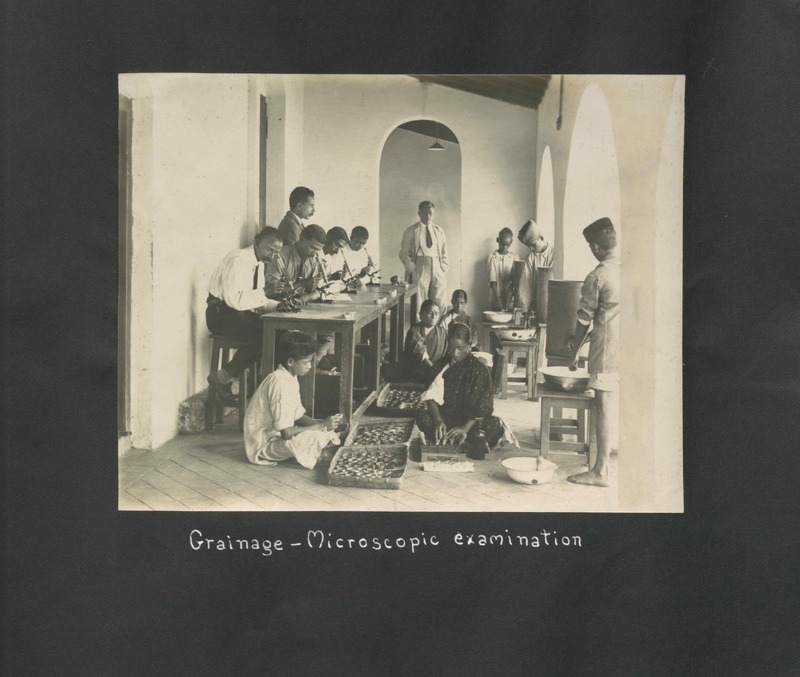 Grainage-Microscopic Examination, Mysore Sericulture DepartmentThis image is from a 1925 photo album (image no. 14 in the listed archival identifier) from the Mysore Sericulture Department in Mysore state, in India. The album showcases a diversity of images from the sericulture process, starting from the cultivation of silkworms, all the way to the production and packing of raw silk. The image is from a collection of material related to Leslie Coleman, a Canadian entomologist, who was initially hired by the Maharaja of Mysore to solve a pest problem in their areca plantations. During his time, he was instrumental in setting up agricultural practices and education, and also extending the sericulture work in the Mysore state. The album’s purpose did seem to be a demonstration of the entire process of running a silk farm. We can’t say for certain who is the photographer, or what prompted Coleman to keep this album (the Archives at NCBS does not have similar albums for other farming processes). But the album and Coleman’s collections are indicative of his cross-cultural moves across colonial empires, from Canada to Germany and eventually to Mysore, India. The object also showcases the technologies that had been established before the arrival of Coleman, in conversation with the Japanese in the late 19th century, including bringing in experts and machinery. This image has an innocuous sounding title, focusing on the 'Grainage-Microscopic Examination' that is integral to sericulture. But we also see the emergence of other societal themes. A group of men sit on chairs and peer at the microscopes; children and women sit on the floor tending to preliminary steps; and a supervisor-like man oversees the examination. This fragment prompts questions around the hierarchy of science, and brings to fore layers of gender, class, caste and labour that anchor sericulture work.
 -
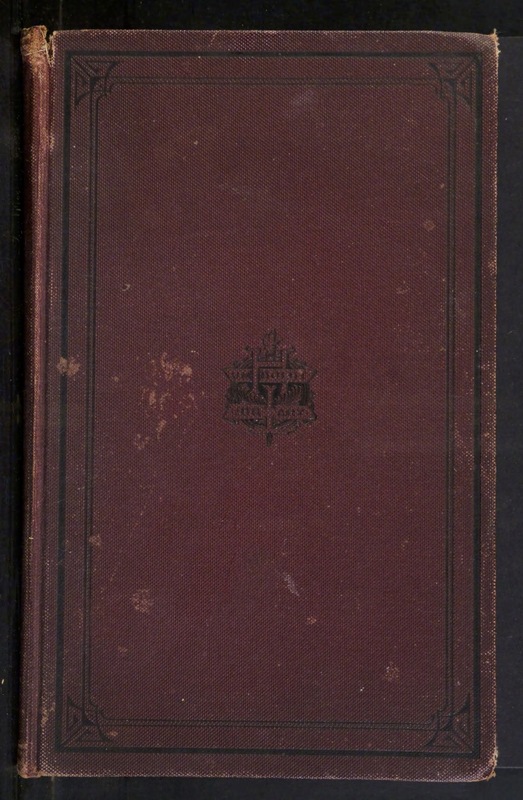 The Descent of Man, and Selection in Relation to SexThis volume is an American pirated edition of The Descent of Man by Charles Darwin, issued in the mid-1880s as part of The Humboldt Library of Science in New York. At the time, the United States did not recognise international copyright, allowing American publishers to reprint British works without paying royalties. Sold for as little as 75 cents (or $1.50 in cloth), this double-columned edition on cheap paper cost a fraction of the authorised John Murray copies imported from Britain, which retailed for $10. Its format reflects a deliberate attempt to make scientific works affordable to a broad readership. Pirated editions were abundant in nineteenth-century America and played a central role in the transatlantic circulation of knowledge. Firms such as the Humboldt Library reprinted popular scientific and literary works quickly and cheaply, often reaching readers far beyond elite institutions. Although European publishers sought to curb this practice in the late century, piracy in this earlier period dramatically expanded access to books, particularly among working- and middle-class audiences. In Darwin’s case, the effects were especially significant. The Descent of Man addressed the evolution of humanity and entered directly into heated debates about race, morality, and civilisation. Cheap American reprints helped carry these arguments into lecture halls, churches, mechanics’ institutes, and private homes. This fragile, inexpensive volume therefore testifies not only to the material culture of nineteenth-century print, but to the crucial role of piracy in transforming evolutionary theory into a global public controversy.